Waterproofing Guides
Waterproofing in Dehradun: The Complete Guide to Methods, Costs & Monsoon Protection
Why leakage keeps coming back in Doon Valley homes, how the main waterproofing systems compare, what the work realistically costs, and how to choose a contractor who will still be around next monsoon.
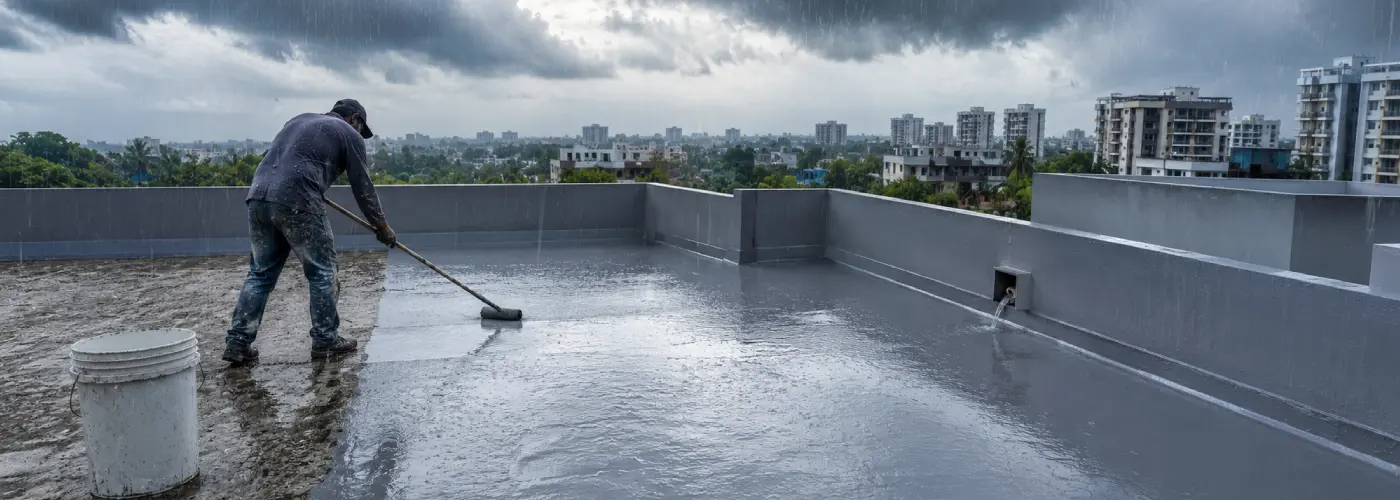
Leakage in your home?
Get a free site inspection and a written, itemised quote before anything starts.
- No inspection charges
- Written quote before work
- Branded certified materials
- Written workmanship warranty
If you own a home in Dehradun, you have probably had this conversation already. A patch appears on the bedroom ceiling in July. The paint bubbles. Somebody says it will dry out after the rains. It does – and next July it comes back, slightly bigger.
That cycle is the reason waterproofing in Dehradun is not a cosmetic job. With the Doon Valley receiving heavy, sustained monsoon rainfall every year, water finds every hairline crack in an RCC slab and stays there. This guide explains what actually causes leakage in local buildings, how the main waterproofing methods compare, what the work realistically costs, and how to choose a contractor who will not be untraceable by the following season.
Why Waterproofing in Dehradun Is a Different Problem
Waterproofing advice written for Delhi or Jaipur does not transfer cleanly to Dehradun. The rainfall pattern, the terrain and the local building stock all change what works.
The Doon Valley Rainfall Factor
Dehradun is one of the wetter cities in North India. The monsoon does not arrive as a few dramatic storms – it settles in for weeks. That distinction matters more than the total figure:
- Sustained saturation. A slab that stays wet for days does not get a chance to dry between spells. Water is pushed deeper into the concrete by simple hydrostatic pressure.
- Slope and runoff. Homes on the valley’s slopes – Rajpur Road, Sahastradhara side, Mussoorie Road – deal with water arriving sideways against retaining walls and basements, not just falling on the roof.
- Temperature swing. Cool nights and hot afternoons make an exposed roof slab expand and contract daily. Over years, that movement opens the hairline cracks water needs.
What Local Construction Adds to the Problem
Alongside the weather, three construction habits are behind most of the leakage cases in the city:
- Waterproofing treated as optional. On tight budgets it is the first line cut from the estimate, then paid for twice over in repairs.
- Under-cured concrete. Slabs poured and left without proper water curing develop shrinkage cracks within the first year.
- Old, patched terraces. Many houses have four or five layers of previous repair on the roof. Each new coat traps moisture under the last one instead of removing it.
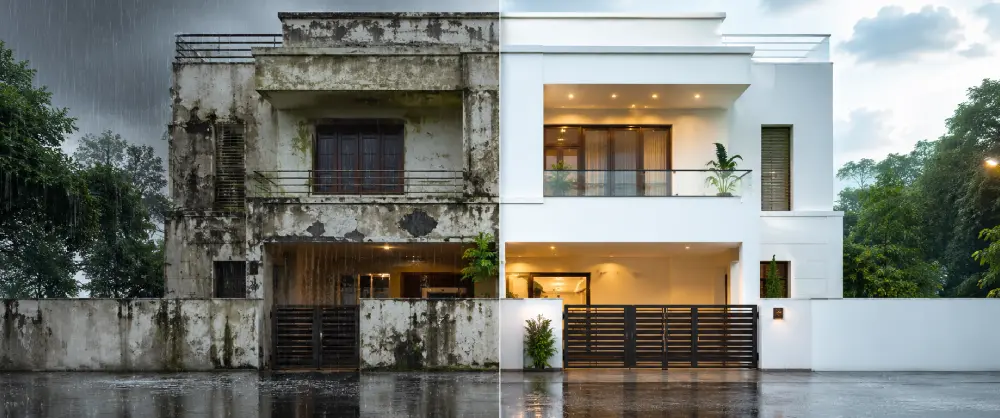
Worth knowing: dampness on an internal wall almost never starts at that wall. The entry point is usually a terrace crack, a leaking pipe chase or a parapet junction several feet away. Treating the visible patch alone is why so many repairs fail.
7 Early Signs Your Building Needs Waterproofing
Water damage is quiet for a long time before it is obvious. Catching it early is the difference between a coating job and structural repair.
- Paint blistering or peeling on a ceiling or the lower part of a wall.
- A white powdery deposit on plaster or brickwork – efflorescence, which means salts are being carried out by moving water.
- Damp patches that change shape with the weather instead of staying fixed.
- A persistent musty smell in a room, cupboard or basement even when it is clean.
- Hairline cracks on the terrace, especially near the parapet junction, around the water tank base, or at pipe outlets.
- Water ponding on the roof more than a few hours after rain has stopped – a sign the slope has failed.
- Rust stains or exposed steel on a ceiling or balcony soffit. This one is not cosmetic. It means water has already reached the reinforcement.
If you can tick two or more, book an inspection before the next monsoon rather than after it.
Where Leakage Starts in a Dehradun Home
| Where you see it | Where it usually starts | Common cause | Typical treatment |
|---|---|---|---|
| Top-floor ceiling patch | Terrace slab | Cracked slab, failed old coating, ponding | Terrace waterproofing + slope correction |
| Damp internal wall, waist height | External wall or plinth | Rising damp, missing DPC | Dampness treatment, chemical injection |
| Corner damp near bathroom | Bathroom floor / sunken portion | Failed sunken-slab waterproofing, pipe leak | Bathroom waterproofing |
| Basement floor or wall seepage | Below-ground water pressure | No negative-side treatment | Basement waterproofing + injection grouting |
| Damp patch below a water tank | Tank base or tank wall | Cracked tank plaster, no internal coating | Water tank waterproofing |
| Ceiling drip at a fixed point | Crack or construction joint | Structural crack, honeycombing | PU / epoxy injection grouting |
| Damp along a shared wall | Wall junction, external plaster | Porous plaster, open joint | Brick wall waterproofing |
Waterproofing Methods Compared: Which One Actually Suits Your Building?
There is no single best method. The right choice depends on the surface, the exposure, your budget and how long you need it to last.
1. Acrylic Liquid Membrane Coating
A water-based elastomeric coating applied by brush or roller in two or more coats, usually with a fibre mesh at the joints. It cures into a seamless flexible film.
- Best for: terraces, roofs, parapets, chajjas
- Strength: economical, quick to apply, no joints to fail
- Limitation: UV degrades it over time; not for permanently ponded areas
2. Polyurethane (PU) Coating
A higher-grade seamless coating with far better elasticity and UV resistance than acrylic. It bridges moving cracks instead of tearing at them.
- Best for: exposed roofs, terraces with foot traffic, balconies
- Strength: long service life, handles thermal movement well
- Limitation: costs more, and surface preparation must be done properly or it will not bond
3. APP Bituminous Membrane
Factory-made rolls torch-applied to the slab and overlapped at the seams. A heavy-duty system used widely on commercial roofs.
- Best for: large flat roofs, podiums, areas that will be covered by tiles or screed
- Strength: very robust once installed, high puncture resistance
- Limitation: the overlaps are the weak point – poor torching leads to failure at the joints
4. Brickbat Coba
The traditional system: a sloped layer of broken brick set in waterproof mortar, finished with a china mosaic or tile topping. Still common in Dehradun for good reason.
- Best for: terraces that need slope correction and thermal insulation together
- Strength: long life, walkable, keeps the top floor noticeably cooler
- Limitation: adds dead load to the slab, takes longer, needs skilled labour
5. Crystalline / Chemical Waterproofing
Cementitious chemicals that react with moisture inside the concrete to grow crystals that block the capillaries. It works from within the concrete rather than as a surface skin.
- Best for: water tanks, basements, retaining walls, negative-side application
- Strength: cannot peel off, self-seals fine cracks, safe for potable water tanks
- Limitation: will not bridge a moving structural crack
6. Injection Grouting (PU & Epoxy)
Ports are drilled into the crack and resin is injected under pressure to fill the void from the inside.
- PU grout expands on contact with water – used to stop an active, running leak.
- Epoxy grout is rigid and structural – used to bond a dormant crack back together.
- Best for: basement walls, active leaks, construction joints, honeycombed concrete
- Limitation: it is a targeted repair, not a substitute for a full surface system. See our injection grouting page for the full process.
Method Comparison at a Glance
| Method | Best surface | Typical life | Walkable | Relative cost |
|---|---|---|---|---|
| Acrylic coating | Terrace, parapet | 3-5 years | Light use only | ₹ |
| PU coating | Exposed roof, balcony | 7-10 years | Yes | ₹₹₹ |
| APP membrane | Large flat roof | 8-12 years | Needs protection layer | ₹₹ |
| Brickbat coba | Terrace needing slope | 10-15 years | Yes | ₹₹₹ |
| Crystalline / chemical | Tank, basement, wall | 10+ years | N/A | ₹₹ |
| Injection grouting | Cracks, joints, basement | Permanent for that crack | N/A | ₹₹ (per point) |
Waterproofing Cost in Dehradun
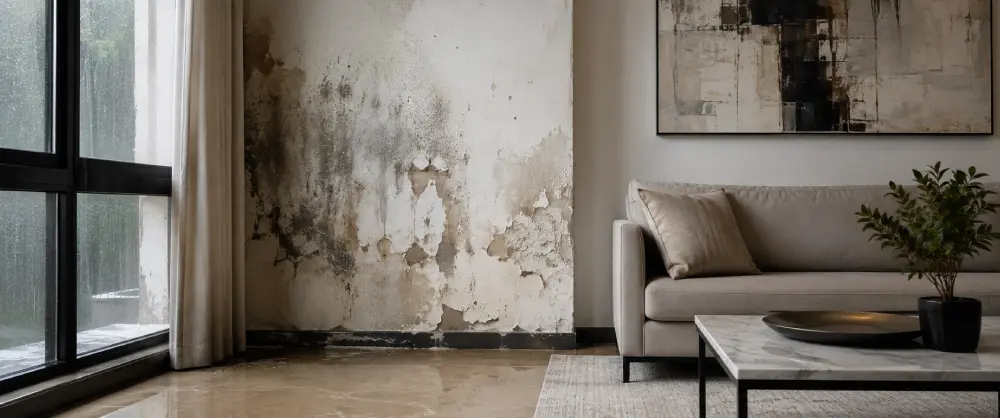
This is the first question almost everyone asks, and the honest answer is that no contractor can quote accurately without seeing the surface. Two terraces of the same size can differ by 60% in price depending on how much old material has to come off first.
What Actually Moves the Price Up or Down
- Area and access. Larger areas bring the per-square-foot rate down. Difficult access – narrow stairs, no lift, upper floors – pushes it up.
- Surface preparation. Removing failed coatings, grinding, crack cutting and filling can be a third of the job.
- Method selected. A basic acrylic coat and a full brickbat coba are not comparable products.
- Severity. An active leak with exposed reinforcement needs structural repair before any waterproofing begins.
- Materials. Branded chemicals from established manufacturers cost more than unbranded local material – and are the reason a warranty can be offered at all.
- Warranty period. A longer warranty means a higher material specification and more coats.
Indicative Rate Table
| Treatment | Indicative rate | Basis |
|---|---|---|
| Acrylic liquid membrane coating | ₹40 – ₹70 | per sq ft |
| Polyurethane (PU) coating | ₹90 – ₹160 | per sq ft |
| APP bituminous membrane | ₹80 – ₹130 | per sq ft |
| Brickbat coba with tile finish | ₹120 – ₹200 | per sq ft |
| Crystalline / chemical treatment | ₹35 – ₹60 | per sq ft |
| Basement negative-side treatment | ₹100 – ₹180 | per sq ft |
| Injection grouting | ₹250 – ₹600 | per injection point |
| Bathroom waterproofing | ₹8,000 – ₹18,000 | per bathroom |
| Water tank waterproofing | ₹6,000 – ₹15,000 | per tank |
These are indicative ranges for Dehradun, intended to help you budget. Your actual figure depends on the site condition and is confirmed in writing after a free inspection. Treat any quote given over the phone without a site visit with caution.
Not sure which method your roof needs?
Book a free site inspection and get a written recommendation with an itemised price – no charge, no obligation.
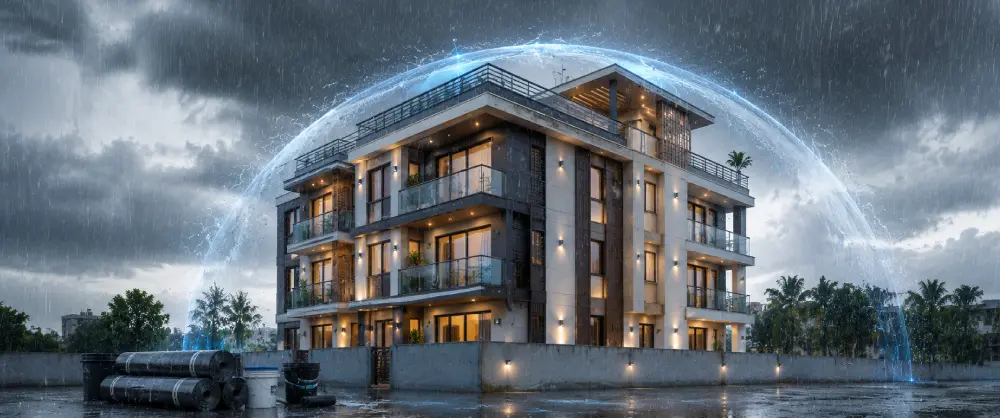
When Is the Best Time for Waterproofing in Dehradun?
Timing changes the result more than most homeowners expect, because almost every waterproofing product needs a dry substrate and a proper curing window.
- March to May – best. Dry, warm, and ahead of the monsoon. Coatings cure fully and you get the protection before you need it. Book early; this window fills up.
- October to February – good. Post-monsoon and winter work well for planned jobs. Curing is slower in peak winter, so allow extra days.
- June to September – emergency only. Full systems cannot be applied properly on a wet slab. What is possible during the monsoon is emergency containment: PU injection to stop an active leak, temporary sealing, and a full treatment scheduled once the rain stops.
If a contractor offers to apply a complete terrace system in the middle of a wet week, that is a warning sign, not flexibility.
How to Choose a Waterproofing Contractor in Dehradun
Waterproofing is a trade where the work is hidden the moment it is finished. You cannot inspect the result – you can only inspect the process. Ask these before you sign with any waterproofing contractor in Dehradun:
- Do they inspect before quoting? A quote issued without a site visit is a guess.
- Is the quote itemised in writing? Surface preparation, materials, number of coats, area, and warranty should each be listed.
- Which brand of chemicals? Ask for the product name, not just “imported material”. Then check the manufacturer’s specification for that product.
- What is the warranty, in writing? A verbal warranty is worth nothing two years later. Ask what it covers and what voids it.
- Can they show local work? Completed jobs in Dehradun, ideally on a similar building type, and preferably ones a few monsoons old.
- Who does the work? An in-house trained crew or labour arranged the morning it starts.
- How is the surface prepared? If the answer is “we will coat over the existing layer”, the new coat will fail with the old one.
- Is there a ponding test? For terraces and tanks, a 24-48 hour water test before handover is standard practice.
Red Flags to Walk Away From
- A price quoted on the phone, sight unseen
- Full payment demanded upfront
- No written scope, no bill, no warranty document
- Pressure to decide “today only” for a discount
- Vague answers about which material will be used
5 Mistakes Dehradun Homeowners Make With Waterproofing
- Painting over the damp patch. Waterproof paint on a wet wall traps moisture and the patch returns larger. Find the source first.
- Waiting for the monsoon to confirm the problem. By the time water reaches the ceiling, it has been travelling through the slab for months.
- Treating the symptom, not the entry point. The stain and the leak are rarely in the same place.
- Choosing on price alone. A ₹25/sq ft coating redone every second season costs more than a ₹90/sq ft system that lasts a decade.
- Skipping slope correction. If water still ponds on the terrace after treatment, the coating is being asked to do a job drainage should have done.
Frequently Asked Questions About Waterproofing in Dehradun
Between three and fifteen years, depending entirely on the system. A basic acrylic coating gives three to five years; PU coating around seven to ten; brickbat coba and crystalline systems can last well over a decade. Surface preparation matters as much as the product – a premium chemical applied to a poorly prepared slab will fail early.
Roughly ₹40 to ₹200 per square foot depending on the method, plus the extent of repair the surface needs first. Basic coatings sit at the lower end and full brickbat coba at the upper end. An accurate figure comes only after a site inspection, which Sunroof provides free of charge.
Full treatments should not be. Nearly every system needs a dry surface and a curing window that heavy rain will not allow. Emergency work is different – PU injection grouting can stop an active leak even in wet conditions, with the permanent treatment scheduled once the weather clears.
Yes, and it is far cheaper at construction stage. Waterproofing the terrace, bathrooms, sunken slabs and the plinth while the structure is going up costs a fraction of retrofitting the same protection after the first monsoon exposes the gaps.
For an exposed terrace that also needs slope correction, brickbat coba with a tile finish is hard to beat on service life. Where the slope is already correct and the budget is tighter, a PU coating over a properly prepared slab is the practical choice. The decision should follow the inspection, not the other way round – see our roof waterproofing page for details.
First identify where the water is entering – a terrace crack, an external wall, a leaking pipe chase or rising damp from the plinth. Then treat that source, let the wall dry fully, and only then re-plaster and repaint. Sealing the internal face while the source is live will push the problem to the next wall. Our dampness treatment process starts with locating the entry point.
Yes. Sunroof provides a written workmanship warranty, with the period depending on the system specified. The scope and terms are stated on the quotation before work starts, so nothing is left to memory.
Most residential jobs are completed in one to three days. Larger terraces, basements and brickbat coba work take longer because of curing time, and the schedule is confirmed at the inspection stage.
Related Services
Stop the Leakage Before the Next Monsoon
Sunroof Waterproofing has been treating leakage, dampness and seepage across Dehradun since 2015 – roofs, terraces, basements, bathrooms, walls and water tanks. Every job starts with a free site inspection and a written, itemised quote. No charge for the visit, and no obligation to proceed.
New Patel Nagar, Goswami Chowk, Near Vishal Mega Mart, Dehradun 248001
Related Services
Other waterproofing services in Dehradun
Explore our full range of waterproofing and leakage solutions for every part of your property.
Service
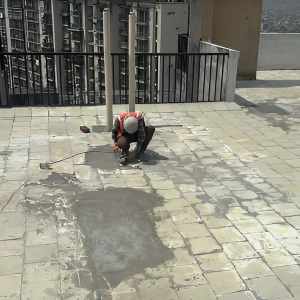
Roof Waterproofing in Dehradun
Slope correction, crack treatment and a coating system matched to your slab – with a ponding test before handover.
Service
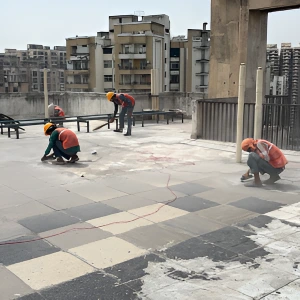
Terrace Waterproofing
Brickbat coba, PU and membrane systems for exposed terraces that also need drainage fixed.
Service
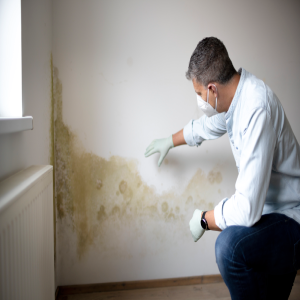
Dampness & Seepage Treatment
We locate the entry point first, then treat it – so the patch does not come back next monsoon.